Author: whitehorseins2021@gmail.com whitehorseins2021@gmail.com

  • Professional Indemnity Insurance for Consultants and Freelancers in India

    Professional Indemnity Insurance for Consultants and Freelancers in India

    In today’s fast-changing work environment, more professionals are choosing to work independently as consultants and freelancers. While this freedom comes with flexibility and creativity, it also brings professional risks. A small mistake, miscommunication, or delay in service can lead to a client filing a legal claim against you.

    This is where professional indemnity insurance in India becomes crucial. It safeguards you from financial and legal liabilities that may arise due to professional errors, omissions, or negligence.

    Whether you’re a digital marketer, IT consultant, architect, or legal advisor, indemnity insurance ensures your reputation and finances remain protected.


    What Is Professional Indemnity Insurance?

    Professional indemnity insurance (PI insurance) is a specialized policy that protects professionals from claims made by clients alleging financial loss due to errors, negligence, or inadequate service.

    In simple terms, it covers the cost of defending yourself legally and compensating clients, if required.

    For example:

    • A marketing consultant accidentally uses copyrighted content in a client’s campaign.
    • An architect’s design flaw leads to additional project expenses.
    • A software developer’s coding error causes a client’s system to crash.

    In all these cases, professional indemnity insurance in India would cover legal defense fees, settlements, and compensation costs — saving you from a potential financial disaster.


    Why Consultants and Freelancers Need Indemnity Insurance

    Freelancers and consultants often work directly with clients, sometimes without large corporate backing. This means any professional mistake can lead to personal financial liability.

    Here’s why indemnity insurance is vital:

    1. Client Lawsuits Are Costly: Even a false claim can lead to high legal fees and reputational harm.
    2. Protection from Human Error: Everyone makes mistakes, but indemnity insurance ensures those mistakes don’t ruin your finances.
    3. Mandatory for Certain Professions: Fields like law, accounting, architecture, and healthcare often require indemnity coverage.
    4. Boosts Credibility: Clients trust professionals who have indemnity cover — it shows responsibility and reliability.
    5. Covers Legal Defense and Compensation: You won’t have to pay legal costs, settlements, or judgments out of pocket.

    professional indemnity insurance India

    Who Should Buy Professional Indemnity Insurance in India?

    This insurance is ideal for any professional who provides services, advice, or expertise to clients.

    Common professionals who need it include:

    • Management consultants
    • Chartered accountants and auditors
    • IT consultants, software developers, and web designers
    • Architects and civil engineers
    • Doctors, surgeons, and medical practitioners
    • Legal advisors and advocates
    • Digital marketers and advertising professionals
    • Content writers, designers, and strategists

    In short, if your work involves advice, design, analysis, or professional judgment, you should consider indemnity insurance.


    Key Features of Professional Indemnity Insurance in India

    Here are the major highlights that make this policy essential:

    1. Legal Liability Coverage

    Covers the cost of defending yourself in court against claims of negligence, professional error, or breach of duty.

    2. Compensation for Financial Loss

    If a client suffers financial damage due to your professional advice or service, the insurer compensates them on your behalf.

    3. Defamation and Libel Protection

    If a client accuses you of defamation or loss of reputation through your work, your policy helps cover legal and compensation costs.

    4. Breach of Confidentiality

    Covers unintentional data leaks or misuse of confidential client information.

    5. Worldwide Coverage

    Some insurers extend protection to claims made outside India, depending on your policy terms.

    6. Retroactive Coverage

    If a claim is made for work you did before the policy started, retroactive coverage ensures protection (provided you had continuous coverage).


    What Professional Indemnity Insurance Does Not Cover

    It’s equally important to understand what isn’t covered. Typically, exclusions include:

    • Criminal acts or intentional wrongdoing
    • Contractual liabilities not related to negligence
    • Bodily injury or property damage (covered under general liability policies)
    • Fraud, dishonesty, or illegal activities
    • Known issues before policy purchase

    Reading the fine print helps ensure there are no surprises during claim settlement.


    How to File a Claim for Professional Indemnity Insurance

    If a client raises a claim against you, here’s what you should do:

    1. Notify the Insurer Immediately: Provide details of the claim or potential threat of one.
    2. Submit Documentation: Include contracts, communication with the client, and details of the incident.
    3. Cooperate with Investigation: The insurer may conduct an independent review to assess liability.
    4. Claim Settlement: Once verified, your insurer covers legal costs, settlements, or judgments as per the policy limit.

    Quick action and transparency are key to smooth claim processing.


    Benefits of Professional Indemnity Insurance in India

    1. Comprehensive Legal Protection: Covers both defense costs and compensation payouts.
    2. Peace of Mind: Focus on your work without worrying about potential client disputes.
    3. Financial Security: Prevents professional errors from draining your savings.
    4. Enhanced Professional Image: Clients prefer professionals with liability coverage.
    5. Flexible Coverage Options: Customize coverage based on your business size and industry.

    How to Choose the Right Policy

    Here’s what to consider before purchasing professional indemnity insurance in India:

    1. Check Coverage Limits: Ensure the policy limit matches your project or client size.
    2. Look for Retroactive Coverage: This protects you for past projects.
    3. Review Exclusions: Avoid policies with too many restrictive clauses.
    4. Compare Premiums and Insurers: Use platforms like KaroInsure to compare top providers and get instant quotes.
    5. Understand Claim Procedures: Choose insurers with a strong claim settlement record.

    Documents Required for Buying Indemnity Insurance

    When purchasing the policy, you’ll typically need:

    • Valid ID and professional license
    • Proof of business registration (if applicable)
    • Past claim history (if any)
    • Details of services provided
    • Expected annual turnover or project value

    These details help the insurer determine your risk level and premium.


    How Much Does Professional Indemnity Insurance Cost in India?

    Premiums depend on several factors, including:

    • Nature of profession
    • Annual income or turnover
    • Risk exposure (advisory vs. operational roles)
    • Claim history
    • Coverage amount (usually ₹10 lakh to ₹1 crore or more)

    Typically, small consultants and freelancers can get good coverage for as low as ₹2,000–₹5,000 per year.


    professional indemnity insurance India

    Real-Life Example

    Let’s say you’re an IT consultant who advises a client on implementing a cloud system. A technical misconfiguration causes data loss, and the client sues you for ₹10 lakh in damages.

    Without indemnity insurance, you would pay legal fees and compensation from your pocket. With professional indemnity insurance in India, your insurer covers these costs — protecting both your finances and reputation.


    Conclusion

    In the dynamic world of freelancing and consulting, even one small professional error can trigger legal complications and financial loss. That’s why professional indemnity insurance in India isn’t just an option — it’s a necessity.

    It provides a financial safety net, boosts your credibility, and allows you to focus on delivering quality work without constant worry.

    With KaroInsure, you can easily compare, customize, and buy professional indemnity insurance plans from top insurers — all in a few clicks. Protect your career, your business, and your peace of mind today.


  • Tenant’s Insurance in India: Protecting Your Belongings in a Rented Home

    Tenant’s Insurance in India: Protecting Your Belongings in a Rented Home

    In today’s urban lifestyle, renting a house or apartment is common, especially in metro cities. While most people ensure the property owner has home insurance, very few tenants realize that their personal belongings need protection too. That’s where tenant insurance in India becomes essential.

    If you’re living in a rented home, your valuables — furniture, electronics, appliances, and personal items — can be at risk from fire, theft, or natural calamities. Tenant insurance helps you secure these possessions and gives you peace of mind.


    What Is Tenant Insurance?

    Tenant insurance, also known as renter’s insurance, is a policy designed to protect the personal belongings of tenants living in rented homes. It covers the cost of repair or replacement if your items are damaged, lost, or stolen due to covered risks like fire, burglary, water leakage, or accidents.

    Unlike home insurance, which covers the building structure, tenant insurance focuses only on the contents owned by the tenant — such as gadgets, furniture, clothes, and household equipment.


    Why Tenant Insurance Matters in India

    Many people assume that if their landlord has home insurance, their personal items are automatically covered. However, that’s not the case. The landlord’s policy usually covers only the structure — not your personal belongings.

    Imagine a situation where a short circuit damages your laptop or a theft leads to loss of jewelry. Without tenant insurance, you’ll have to bear the financial loss yourself.

    A tenant insurance policy in India ensures that you’re compensated for these losses, helping you recover quickly from unexpected events.


    tenant insurance india

    Key Features of Tenant Insurance in India

    Here are the main features that make tenant insurance valuable for renters:

    1. Protection Against Fire and Accidental Damage

    If your belongings are damaged due to fire, explosion, or lightning, the insurer compensates you for the loss.

    2. Theft and Burglary Cover

    In case of theft, burglary, or forced entry, your stolen items are covered under the policy, subject to claim verification.

    3. Natural Calamity Coverage

    Events like floods, earthquakes, or storms can damage your possessions. Tenant insurance covers such natural disasters, giving you financial stability.

    4. Liability Protection

    If an accident occurs within your rented property and causes injury to a guest or damage to a neighbor’s property, the policy covers legal and compensation costs.

    5. Alternative Accommodation

    If your rented home becomes uninhabitable due to an insured event (like fire or flood), some policies provide compensation for temporary accommodation expenses.


    What Tenant Insurance Does Not Cover

    Understanding exclusions is equally important. A tenant insurance policy in India generally does not cover:

    • Damage due to negligence or intentional acts
    • Gradual wear and tear or mechanical breakdown
    • Loss of items outside the insured premises (unless add-on covers apply)
    • War or nuclear-related damage
    • Unauthorized subletting of property

    Always review the policy wording to understand what’s excluded before buying a plan.


    How Tenant Insurance Works in India

    Here’s a simple breakdown of how tenant insurance in India operates:

    1. Purchase a Policy: Choose a plan that covers your belongings’ total value.
    2. Pay the Premium: Premiums are affordable, often starting as low as ₹500–₹1,000 per year.
    3. Raise a Claim: In case of loss or damage, inform the insurer immediately.
    4. Submit Proof: Provide documents like FIR, photos, or receipts for lost items.
    5. Claim Settlement: After verification, the insurer compensates you as per policy terms.

    Step-by-Step Process to Buy Tenant Insurance

    Step 1: Evaluate the Value of Your Belongings

    List your items — furniture, electronics, clothes, and appliances — and estimate their total worth. This helps you choose the right sum insured.

    Step 2: Compare Policies Online

    Use platforms like KaroInsure to compare policies from multiple insurers. Look for plans that offer wide coverage and minimal exclusions.

    Step 3: Check Add-Ons

    Some insurers offer add-ons like coverage for portable electronics, jewelry, or temporary relocation expenses. Choose these based on your needs.

    Step 4: Review Terms and Conditions

    Understand deductibles, exclusions, and claim procedures carefully to avoid surprises later.

    Step 5: Purchase & Receive Policy Instantly

    Most policies can be purchased online in a few minutes, with instant digital documentation.


    tenant insurance india

    Benefits of Tenant Insurance in India

    1. Affordable Premiums: Tenant insurance is much cheaper than home insurance, offering protection at a fraction of the cost.
    2. Peace of Mind: It ensures your savings remain untouched in case of sudden losses.
    3. Comprehensive Protection: Covers theft, fire, natural calamities, and liabilities.
    4. Quick Claim Settlement: With digital documentation, claims are processed faster.
    5. Customizable Plans: You can choose coverage as per your lifestyle and item value.

    With such benefits, every renter should consider a tenant insurance policy in India as a smart financial safeguard.


    Documents Required for Tenant Insurance Claims

    If an unfortunate event occurs, you’ll need the following documents to file a claim:

    • Copy of tenant insurance policy
    • Proof of residence or rental agreement
    • FIR (for theft or burglary cases)
    • Photos or video evidence of damage
    • Original purchase bills (if available)
    • Filled and signed claim form

    Providing accurate documents ensures quick claim approval.


    Tips to Choose the Right Tenant Insurance Policy

    1. Check Claim Settlement Ratio: Choose insurers with a high claim success rate.
    2. Consider Add-Ons: Include valuable item protection if you own expensive gadgets or jewelry.
    3. Verify Network Repair Partners: Some insurers offer home service tie-ups for quick repairs.
    4. Opt for Digital Policies: They’re easier to manage and renew online.

    Conclusion

    Whether you rent a flat in Mumbai or a studio apartment in Bengaluru, protecting your belongings should be a priority. Unexpected incidents like fire, theft, or natural calamities can cause huge financial stress.

    A tenant insurance policy in India ensures your valuable possessions are safeguarded against such events. It’s a small investment for long-term security and peace of mind.

    With KaroInsure, comparing, selecting, and purchasing tenant insurance is quick and hassle-free. You can explore top policies from trusted insurers, understand coverage details, and get the best deal — all in one place.

    Secure your rented home today with KaroInsure’s trusted tenant insurance solutions.

  • How to File a Cashless Motor Insurance Claim in India

    How to File a Cashless Motor Insurance Claim in India

    Having cashless car insurance in India makes life easier after an accident. Instead of paying for repairs from your pocket, your insurer settles the bills directly with the garage. However, to ensure a smooth process, you must understand how to file a cashless car insurance claim in India the right way.

    In this guide, we’ll take you through every step of filing a claim, from reporting the incident to getting your car back in perfect condition — without financial stress.


    What Is a Cashless Car Insurance Claim?

    A cashless car insurance claim allows policyholders to get their vehicle repaired at a network garage without paying upfront. The insurance company pays the garage directly after verifying the claim.

    This system saves you from the burden of arranging funds, especially in emergencies. You only pay for expenses not covered under the policy, such as depreciation or consumables (if not included in add-ons).

    For example, if your car meets with an accident and the repair bill is ₹50,000, the insurer directly settles most of it with the workshop. You pay only the deductible or uncovered costs.


    How Does a Cashless Motor Insurance Claim Work?

    Here’s how a cashless car insurance claim in India works:

    1. The policyholder reports the damage or accident to the insurance company.
    2. The insurer sends a surveyor to inspect the vehicle.
    3. After approval, the car is sent to a network garage for repairs.
    4. The insurer directly pays the garage after the repairs are complete.

    It’s that simple — but each step must be followed carefully to avoid delays or claim rejection.


    cashless car insurance claim India

    Step-by-Step Process to File a Cashless Car Insurance Claim in India

    Filing a cashless claim can be hassle-free if you follow these steps:

    1. Inform the Insurance Company Immediately

    After an accident or damage, notify your insurer right away. Most companies have a 24×7 helpline or mobile app to register claims.

    Provide details such as:

    • Policy number
    • Vehicle registration number
    • Date, time, and location of the incident
    • A brief description of what happened

    Timely reporting ensures quick claim processing and approval.


    2. File an FIR (if required)

    For serious accidents, theft, or third-party injuries, file a First Information Report (FIR) at the nearest police station.
    The FIR acts as official proof and may be mandatory for claim approval, especially in third-party or theft cases.


    3. Arrange for Vehicle Inspection

    Once the claim is registered, the insurance company assigns a surveyor to inspect the damaged vehicle.
    The surveyor assesses the extent of damage and estimates repair costs.

    If the damage is severe, the surveyor may visit the accident site. For minor damages, some insurers allow you to upload photos or videos online for faster approval.


    4. Tow Your Car to a Network Garage

    After the surveyor’s inspection, move your car to a network garage — one that has a tie-up with your insurer.
    Most insurers have a wide list of authorized workshops across India. You can find these on the insurer’s website or mobile app.

    Choosing a network garage is crucial for availing the cashless facility. If you opt for a non-network garage, you’ll have to pay first and then claim reimbursement later.


    5. Get Repair Approval from the Insurer

    Once the surveyor submits the report, the insurance company reviews and approves the estimated cost of repairs.
    You’ll receive confirmation from the insurer and garage before the work begins.

    Make sure you agree with the assessment and confirm if any costs are excluded.


    6. Car Repairs at the Garage

    The network garage repairs your vehicle according to the insurer-approved estimate.
    You can stay updated about repair progress through the garage or the insurer’s claim tracker.


    7. Final Settlement and Vehicle Delivery

    Once repairs are complete, the insurer pays the garage directly for the approved amount.
    You’ll only need to pay:

    • The compulsory deductible (a small fixed portion you pay for every claim).
    • Uncovered expenses, if any (like accessories or consumables).

    After payment, collect your repaired car and all related invoices for record-keeping.


    Documents Required for Cashless Car Insurance Claim

    Here’s a list of commonly required documents:

    • Copy of car insurance policy
    • Driving license of the person driving at the time of the incident
    • Vehicle registration certificate (RC)
    • FIR (if applicable)
    • Claim form (filled and signed)
    • Repair estimate and bills from the garage
    • Photographs of the damaged vehicle

    Providing complete documents helps prevent claim delays.


    cashless car insurance claim India

    Common Reasons for Claim Rejection

    Even with a cashless policy, claims can be rejected if guidelines aren’t followed. Here are the most frequent reasons:

    • Driving without a valid license or under the influence of alcohol
    • Delayed intimation to the insurer
    • Using a non-network garage
    • False or exaggerated damage reports
    • Policy expired at the time of incident

    Always ensure your policy is active and details are accurate before filing a claim.


    Tips for a Smooth Cashless Claim Process

    1. Keep Emergency Numbers Handy: Save your insurer’s helpline number.
    2. Renew Policy on Time: An expired policy cannot be claimed.
    3. Maintain Honesty: Provide genuine information during claim filing.
    4. Opt for Add-Ons: Consider zero depreciation or consumables cover for better benefits.
    5. Choose the Right Insurer: Pick companies known for high claim settlement ratios and large garage networks.

    Following these tips ensures a stress-free experience when filing a cashless car insurance claim in India.


    Benefits of Cashless Car Insurance Claims

    • No Upfront Payments: You don’t have to arrange money after an accident.
    • Faster Settlements: Direct coordination between insurer and garage saves time.
    • Transparency: Clear communication about covered and uncovered expenses.
    • Wide Network Access: Thousands of garages across India support cashless claims.

    These advantages make cashless car insurance a preferred choice for most vehicle owners.


    Conclusion

    Understanding how to file a cashless car insurance claim in India helps you act quickly and confidently during stressful situations.

    Always notify your insurer immediately, follow the proper claim steps, and use a network garage for direct settlement.

    With KaroInsure, comparing and managing your car insurance is simple and efficient. Whether you need assistance in filing a claim or renewing your policy, KaroInsure ensures a smooth, transparent, and stress-free experience.

    Secure your drive today — explore the best cashless car insurance plans in India with KaroInsure.

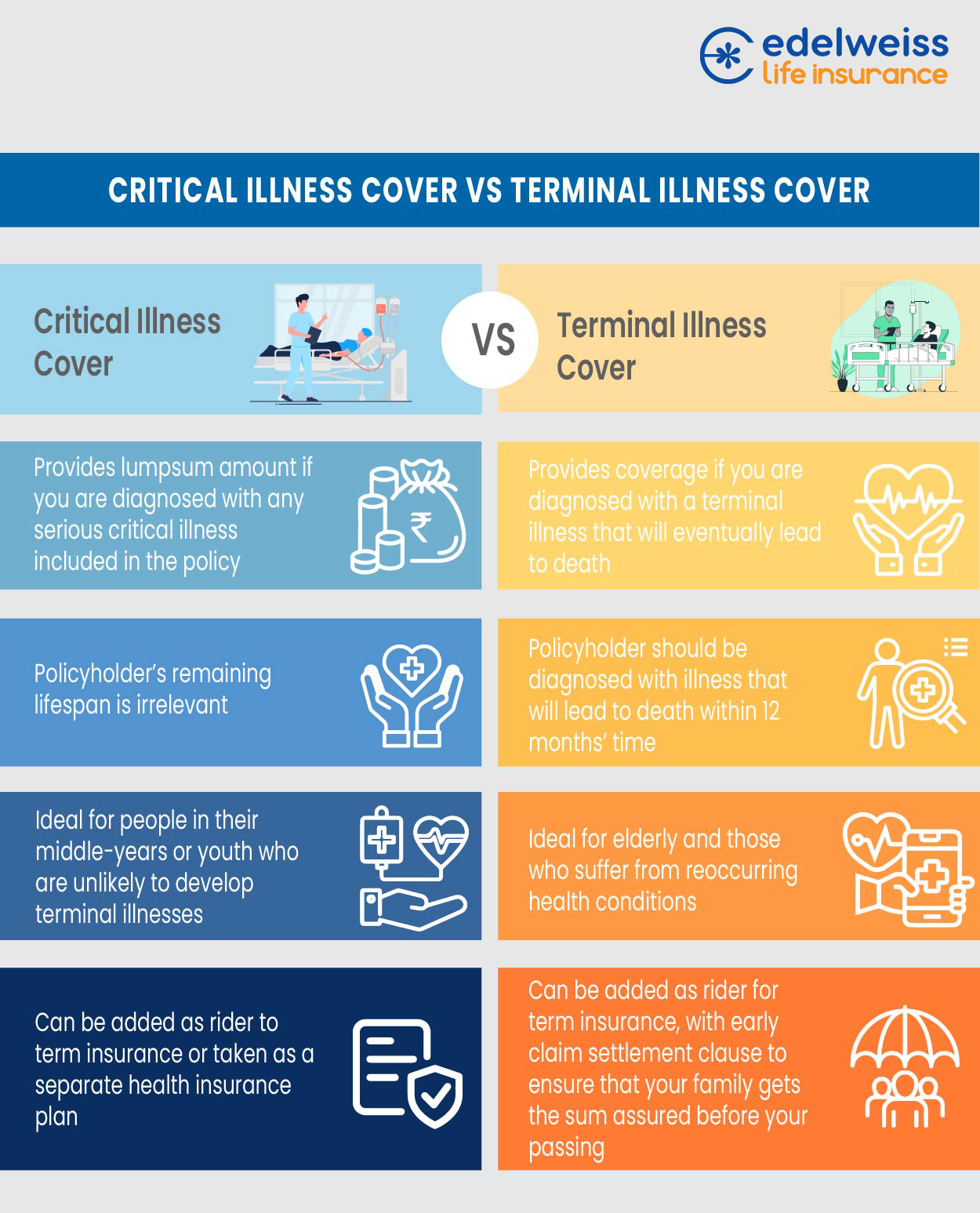
  • Critical Illness vs. Health Insurance in India: Key Differences Explained

    Critical Illness vs. Health Insurance in India: Key Differences Explained

    Healthcare costs in India are rising faster than ever. A single medical emergency can drain years of savings. While most people understand the importance of having a health insurance policy, very few know that it might not be enough in the face of serious diseases like cancer, heart attack, or kidney failure. This is where a Critical Illness Cover steps in.

    In this article, we’ll explain the difference between critical illness and standard health insurance in India, how each works, and why combining both can give you complete financial protection.


    What Is Standard Health Insurance?

    A standard health insurance policy covers your medical expenses during hospitalization. It reimburses or directly pays for the costs of:

    • Hospital room rent
    • Doctor consultations
    • Surgery or treatment
    • Medicines and diagnostic tests

    This type of insurance works on a reimbursement or cashless model. You either pay the bills and claim reimbursement later or use the insurer’s hospital network for direct payment.

    Example: If you are hospitalized due to pneumonia, your health insurance will pay your hospital bills up to the sum insured.

    However, the moment you recover and are discharged, the coverage ends for that event. You won’t receive any extra money for recovery or loss of income.


    critical illness vs health insurance India

    What Is Critical Illness Insurance?

    A Critical Illness Cover is designed for severe, life-threatening diseases that require long-term treatment or rehabilitation. These include cancer, stroke, heart attack, organ failure, and similar illnesses.

    Unlike standard health insurance, it pays a lump-sum amount as soon as the disease is diagnosed — regardless of the actual hospital expenses.

    This amount can be used for:

    • Medical and non-medical expenses
    • Home care or recovery costs
    • Paying EMIs or rent during treatment
    • Supporting your family financially if you can’t work

    Example: If your policy offers ₹10 lakh coverage for critical illnesses and you are diagnosed with cancer, you receive the full ₹10 lakh payout immediately after claim approval — even if your treatment costs ₹5 lakh or ₹15 lakh.


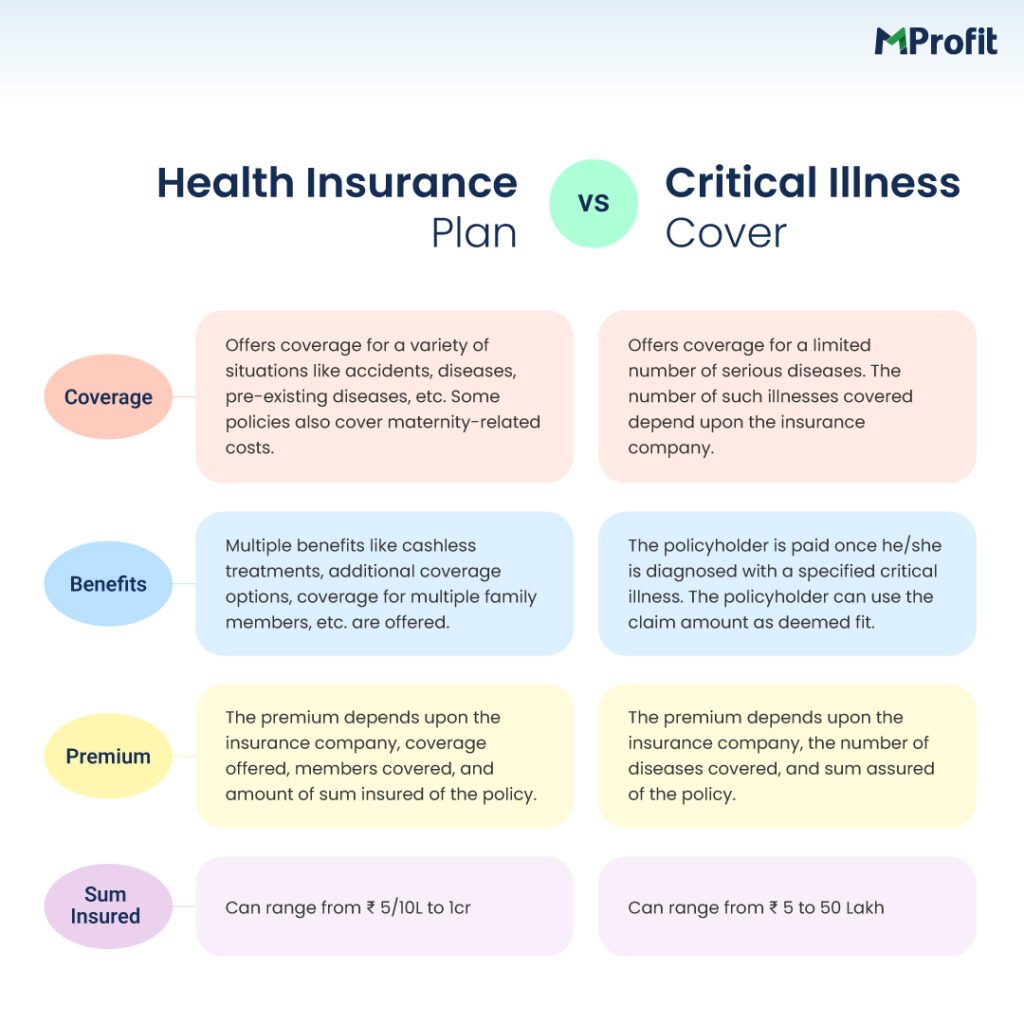
    Key Differences: Critical Illness vs. Health Insurance in India

    FeatureStandard Health InsuranceCritical Illness Insurance
    Coverage TypeHospitalization and medical expensesLump-sum payout on diagnosis of a critical disease
    Claim BasisReimbursement or cashlessOne-time fixed payment
    Diseases CoveredAll covered conditions requiring hospitalizationSpecific critical illnesses listed in policy
    PurposeTo cover medical treatment costsTo provide income replacement and financial support
    PremiumBased on age, sum insured, and health conditionGenerally lower, depends on coverage and illness list
    RenewabilityAnnual renewalLong-term (often up to age 60 or 65)
    Waiting Period30–90 days for illness coverage90 days or more for listed critical illnesses

    Why Critical Illness Cover Is Essential in India

    India is witnessing a rapid rise in lifestyle diseases. According to IRDAI and health reports, nearly 60% of all deaths in India are linked to non-communicable diseases like cancer and heart problems.

    Even the best hospital insurance may not cover the hidden financial impact — such as income loss, travel for treatment, or long-term care.

    A critical illness plan bridges this gap by giving you liquidity and flexibility when you need it the most.

    Key benefits:

    1. Financial Cushion: Provides a tax-free lump sum to use as needed.
    2. Covers Lifestyle Diseases: Offers protection from high-cost illnesses.
    3. Works with Health Insurance: Complements your existing policy for total protection.
    4. Affordable Premiums: Especially cost-effective when bought early in life.

    Example: How Both Covers Work Together

    Let’s assume Ravi, a 35-year-old professional, has:

    • Health Insurance: ₹5 lakh sum insured
    • Critical Illness Cover: ₹10 lakh

    He is diagnosed with a heart condition requiring surgery. His hospital bills total ₹4 lakh.

    • His health insurance pays the ₹4 lakh directly to the hospital.
    • His critical illness plan gives him ₹10 lakh as a lump sum.

    Ravi uses part of this amount for recovery, family expenses, and post-surgery care — without worrying about income loss.

    This combination ensures both medical and financial security, which is essential for long-term peace of mind.


    critical illness vs health insurance India

    Choosing Between the Two: What Should You Do?

    If you are comparing critical illness vs. health insurance in India, the best option is not to choose one over the other, but to combine both.

    Here’s why:

    • Health insurance handles immediate hospitalization costs.
    • Critical illness insurance supports life after diagnosis.

    Together, they cover all aspects of health-related financial risk.


    How to Choose the Right Critical Illness Cover

    When buying a policy, consider:

    1. Number of Diseases Covered: Check the list carefully; most plans cover 20–40 illnesses.
    2. Claim Payout Terms: Understand when and how the lump sum is released.
    3. Waiting and Survival Period: Usually, you must survive 30 days after diagnosis to claim benefits.
    4. Premium Affordability: Compare costs from multiple insurers.
    5. Add-on vs. Standalone Policy: You can buy it separately or as a rider to your main plan.

    Tax Benefits

    Both standard and critical illness policies offer tax deductions under Section 80D of the Income Tax Act. You can claim up to ₹25,000 (₹50,000 for senior citizens) for premiums paid — making these plans even more beneficial.


    Conclusion

    When it comes to critical illness vs. health insurance in India, both serve distinct but equally important purposes. A standard health plan ensures your hospital bills are taken care of, while a critical illness plan protects your long-term financial stability.

    In today’s uncertain health environment, combining the two is the smartest move for complete peace of mind.

    Secure your health and finances with KaroInsure — compare top plans and choose the right mix of health and critical illness insurance today.

  • Livestock Insurance in India: Protecting Farmers Beyond Crops

    Livestock Insurance in India: Protecting Farmers Beyond Crops

    Agriculture in India goes beyond just crops — livestock plays an equally vital role in the rural economy. For millions of Indian farmers, animals such as cows, buffaloes, goats, and poultry are key assets that provide income, food, and security. Yet, these animals face risks from diseases, accidents, and natural disasters. This is where livestock insurance in India becomes essential.


    What Is Livestock Insurance?

    Livestock insurance is a policy designed to protect farmers against the financial loss that occurs if their insured animals die or become permanently disabled due to accidents, diseases, or natural calamities. In India, this coverage is particularly crucial for small and marginal farmers who depend heavily on their livestock for daily livelihood.


    livestock insurance India

    Importance of Livestock Insurance in India

    Livestock contributes significantly to India’s GDP through dairy, poultry, and meat industries. However, disease outbreaks, floods, and droughts can lead to devastating losses. Livestock insurance in India ensures that farmers receive compensation quickly, allowing them to recover and sustain their income.

    Some key benefits include:

    • Financial security: Farmers are compensated for losses, reducing economic hardship.
    • Stability in income: Even after animal loss, farmers can sustain themselves.
    • Encouragement for better animal care: Insured farmers are more likely to maintain health records and vaccinations.
    • Support for rural development: With financial protection, rural communities remain resilient during crises.

    Coverage Under Livestock Insurance in India

    Typical policies cover:

    • Death due to diseases or accidents
    • Permanent disability leading to loss of productivity
    • Natural calamities like floods, lightning, and landslides
    • Theft or injury (in certain plans)

    However, exclusions may include death due to negligence, war, or unregistered animals.


    Government Support for Livestock Insurance

    The Government of India, through the Department of Animal Husbandry and Dairying, provides subsidized insurance schemes for farmers. Some initiatives include:

    • Livestock Insurance Scheme (LIS): Offers up to 50% subsidy on premium for farmers.
    • Rashtriya Gokul Mission: Promotes genetic improvement and provides coverage for high-value indigenous cattle.
    • State-specific schemes: Many states like Maharashtra and Gujarat run their own livestock protection programs.

    These efforts aim to improve livestock management and financial inclusion among rural populations.


    livestock insurance India

    How to Apply for Livestock Insurance in India

    Farmers can purchase policies through:

    • Government veterinary offices
    • Authorized insurance agents
    • Agricultural cooperative societies
    • Online platforms like KaroInsure for simplified insurance comparison and quick policy issuance

    Steps:

    1. Register your livestock with proper identification (ear tag or microchip).
    2. Submit documents like ownership proof, vaccination certificate, and ID.
    3. Pay the premium (subsidy applied for eligible farmers).
    4. Claim in case of loss with a veterinary certificate and death report.

    Challenges in Livestock Insurance Adoption

    Despite its benefits, awareness about livestock insurance in India remains low. Common challenges include:

    • Limited access to insurers in rural areas
    • Delays in claim settlements
    • Lack of awareness about policy terms and eligibility

    However, with growing digital insurance platforms like KaroInsure, farmers now have easier access to transparent, quick, and paperless insurance options.


    Conclusion

    Livestock insurance is more than just a financial product — it’s a lifeline for millions of Indian farmers. It ensures protection beyond crops, helps maintain income stability, and supports rural resilience. As awareness and accessibility grow, livestock insurance in India will continue to play a vital role in securing the future of the country’s agricultural backbone.

  • Blockchain in Insurance: Revolutionizing Trust and Transparency

    Blockchain in Insurance: Revolutionizing Trust and Transparency

    The insurance industry in India has always faced challenges related to data security, claim delays, and lack of transparency. With blockchain in insurance in India, these issues are being addressed through advanced, secure, and transparent systems that are transforming how insurers and policyholders interact.


    What Is Blockchain in Insurance?

    Blockchain is a decentralized digital ledger that records transactions across multiple computers securely and transparently. In the insurance sector, this means that every policy, claim, and payment can be verified and tracked without manual intervention — reducing errors and fraud.


    blockchain in insurance India

    How Blockchain Is Transforming the Indian Insurance Sector

    1. Enhanced Transparency

    With blockchain, all transactions are stored on a shared, immutable ledger. This means both insurers and policyholders can verify details in real time, ensuring greater trust and eliminating disputes.

    2. Faster Claims Processing

    Claims can be automated using smart contracts, which execute predefined actions when certain conditions are met. For instance, in motor insurance, a claim could automatically trigger when an accident report is filed and verified digitally.

    3. Reduced Fraud

    Insurance fraud is a major concern in India. Blockchain prevents tampering of data and ensures that every claim is verified through a transparent, secure network — reducing fraudulent claims significantly.

    4. Improved Data Security

    Blockchain uses encryption and distributed storage, making it nearly impossible for hackers to alter or steal sensitive customer data. This ensures better data protection and compliance with IRDAI regulations.

    5. Simplified Reinsurance and Policy Management

    Blockchain allows seamless data exchange between insurers and reinsurers, reducing manual paperwork and ensuring accurate, up-to-date policy information.


    Blockchain Applications in Indian Insurance

    • Health Insurance: Streamlining hospital records, medical histories, and claim settlements.
    • Motor Insurance: Automated claim validation through IoT and blockchain integration.
    • Crop Insurance: Tracking weather data and claim triggers for parametric insurance.
    • Life Insurance: Securing policyholder information and automating payouts.

    blockchain in insurance India

    Challenges in Adopting Blockchain in India

    • Lack of awareness and technical expertise.
    • Regulatory and data privacy hurdles.
    • High initial implementation costs for insurers.

    However, with government initiatives supporting digital transformation and IRDAI’s push for innovation, blockchain adoption is gradually increasing.


    The Future of Blockchain in Indian Insurance

    Blockchain technology has the potential to make insurance more customer-centric, efficient, and secure. As digital adoption rises, blockchain in insurance in India will play a crucial role in establishing trust and transparency in every transaction.


    Conclusion

    Blockchain is redefining how insurance works in India — making it smarter, faster, and more transparent. As more companies and regulators embrace this technology, policyholders can look forward to a future of hassle-free and trustworthy insurance experiences.

  • Understanding Super Top-Up Health Insurance Plans in India

    Understanding Super Top-Up Health Insurance Plans in India

    Rising medical costs have made it essential to secure comprehensive health coverage. However, standard health insurance policies often come with coverage limits that may not be enough during serious medical emergencies. That’s where Super Top-Up Health Insurance Plans in India come into play. These plans act as an additional layer of protection, ensuring you don’t face financial strain when medical bills go beyond your existing policy limits.


    What is a Super Top-Up Health Insurance Plan?

    A Super Top-Up Health Insurance Plan provides extra coverage beyond the deductible limit of your base health insurance. Unlike a regular top-up, which applies only once per year, a super top-up plan covers multiple hospitalizations within the same policy year once the deductible amount is crossed.

    For example, if your deductible is ₹3 lakhs and your total hospitalization costs for the year are ₹6 lakhs, your super top-up plan will cover the additional ₹3 lakhs, even if these expenses arise from multiple claims.


    Super Top-Up Health Insurance in India

    How Super Top-Up Plans Work

    1. Deductible Selection: You choose a deductible (the amount you pay before the policy starts covering expenses).
    2. Coverage Activation: Once your total medical bills in a policy year exceed that deductible, your super top-up plan takes effect.
    3. Multiple Claims: It covers multiple hospitalizations beyond the deductible, unlike regular top-ups that only cover a single instance.

    These plans are especially beneficial for people who already have a corporate or individual base policy but want higher protection without paying high premiums.


    Benefits of Super Top-Up Health Insurance in India

    • Enhanced Coverage: Provides financial security beyond your base policy’s limit.
    • Affordable Premiums: Cheaper than buying a high-coverage individual health policy.
    • Multiple Claims Coverage: Covers all hospitalizations in a policy year after crossing the deductible.
    • Flexibility: Can be purchased from any insurer, regardless of your existing base policy.
    • Ideal for Families: Family floater super top-ups protect multiple members under one policy.

    Who Should Consider Super Top-Up Health Insurance?

    A super top-up health insurance India plan is ideal for:

    • Individuals relying on employer-provided health insurance.
    • Families needing higher coverage without high premiums.
    • Senior citizens facing rising healthcare costs.
    • People living in metro cities with high treatment expenses.

    If you already have basic coverage but worry about larger hospital bills, a super top-up plan offers the perfect balance between cost and protection.


    Difference Between Top-Up and Super Top-Up Plans

    FeatureTop-Up PlanSuper Top-Up Plan
    Claim BasisSingle hospitalizationMultiple hospitalizations
    Coverage TypeOnce deductible is reached in one claimOnce deductible is reached cumulatively
    Best ForOccasional large claimsMultiple medium or large claims in a year

    This distinction makes super top-up health insurance India plans more practical for those who face recurring medical expenses.


    Super Top-Up Health Insurance in India

    How to Choose the Right Super Top-Up Plan

    When buying a super top-up plan, consider:

    • Deductible Amount: Align it with your existing base policy coverage.
    • Sum Insured: Opt for adequate coverage for your family’s needs.
    • Network Hospitals: Ensure wide cashless hospital access.
    • Waiting Period & Inclusions: Check for pre-existing condition clauses and sub-limits.

    Compare plans on platforms like KaroInsure to find affordable and comprehensive options.


    Conclusion

    A Super Top-Up Health Insurance Plan in India provides smart, affordable, and extended protection against rising healthcare costs. It ensures that even after your base policy limit is exhausted, you remain financially secure. If you already have a health insurance plan but want to expand your coverage without high premiums, a super top-up is a practical choice.

  • Pay Per Mile Car Insurance in India

    Pay Per Mile Car Insurance in India

    With the rise of digital innovations and smarter mobility options, insurance in India is also evolving. One of the newest and most flexible options available is Pay-Per-Mile Car Insurance. Designed for drivers who use their vehicles occasionally or drive short distances, this insurance model ensures you pay only for how much you drive. Let’s explore how Pay-Per-Mile Car Insurance in India works, its benefits, and why it could be the right choice for you.


    What is Pay-Per-Mile Car Insurance?

    Pay-Per-Mile Car Insurance is a usage-based policy where your premium depends on the number of kilometers you drive. Instead of paying a fixed annual premium like in traditional car insurance, you pay a base rate plus an additional cost for every kilometer driven. This makes it a cost-effective solution for low-mileage drivers.

    Insurance companies typically use telematics devices, GPS trackers, or mobile apps to monitor your car’s usage accurately. The less you drive, the less you pay — ensuring complete transparency and control over your insurance costs.


    Pay Per Mile Car Insurance in India

    How It Works

    1. Base Premium: You pay a small fixed premium that covers risks like theft, fire, and natural calamities.
    2. Per-Mile Charges: A per-kilometer charge is added based on your actual driving distance.
    3. Mileage Tracking: Insurers install a tracking device or app to record your total kilometers.
    4. Monthly Billing: At the end of each billing cycle, your usage data is reviewed, and you pay accordingly.

    For example, if you drive 400 kilometers in a month and your rate is ₹1 per kilometer, your monthly premium will include the base charge plus ₹400 for mileage.


    Benefits of Pay-Per-Mile Car Insurance in India

    • Cost Savings: Ideal for those who drive occasionally or own multiple cars.
    • Transparency: You can monitor your usage and payments in real time.
    • Customization: Pay only for what you use instead of flat yearly rates.
    • Encourages Safer Driving: Since your driving behavior affects costs, it promotes responsible driving.
    • Eco-Friendly Impact: Fewer unnecessary trips mean reduced carbon emissions and fuel consumption.

    Who Should Choose Pay-Per-Mile Car Insurance?

    This model suits:

    • People working from home or using public transport regularly.
    • Families owning multiple vehicles but using each one occasionally.
    • Senior citizens or part-time drivers.
    • Urban dwellers who drive only on weekends or short errands.

    Pay Per Mile Car Insurance in India

    Challenges & Considerations

    While it offers flexibility, Pay-Per-Mile Insurance might not suit heavy drivers who commute long distances daily. You must also ensure your insurer provides accurate telematics and fair billing based on verified distance tracking.


    The Future of Pay-Per-Mile Insurance in India

    With the rise of connected vehicles and the digitalization of insurance services, usage-based policies are expected to grow significantly in India. Insurers like KaroInsure are exploring smarter and more customer-friendly options that combine transparency with affordability.


    Conclusion

    Pay-Per-Mile Car Insurance in India is redefining how drivers think about coverage. By linking premiums directly to driving habits, it empowers customers to take charge of their expenses while promoting safer and more sustainable driving. If you drive less, this policy can help you save more — both financially and environmentally.

  • Parametric Crop Insurance in India: Farmers, Weather Triggers & Faster Payouts

    Parametric Crop Insurance in India: Farmers, Weather Triggers & Faster Payouts

    Agriculture is the backbone of India’s economy, but it’s also one of the most vulnerable sectors to weather risks. Traditional crop insurance schemes often take months to process claims, leaving farmers waiting for critical financial support. This is where Parametric Crop Insurance in India comes in — offering faster, transparent, and data-driven payouts.

    What Is Parametric Crop Insurance?

    Parametric crop insurance is a modern insurance model that pays out based on pre-defined parameters such as rainfall, temperature, or wind speed — rather than the actual loss assessment on the ground.
    For example, if rainfall drops below a certain level or exceeds it beyond a threshold, the insurance automatically triggers a payout to farmers.

    This model removes the lengthy claim verification process and provides quick relief when farmers need it most.

    parametric crop insurance India

    How It Works

    1. Parameter Setup: The insurer sets measurable weather triggers (like rainfall or temperature) using reliable data sources such as IMD (India Meteorological Department).
    2. Monitoring: Weather data is continuously monitored through satellites and local weather stations.
    3. Trigger Event: When the weather deviates from the agreed threshold — say, less than 70 mm of rain in 20 days — the policy is triggered.
    4. Instant Payouts: The insured farmer receives an automatic payout without needing to file a claim or wait for a field inspection.

    Why Parametric Crop Insurance Matters in India

    India’s farmers face unpredictable climate patterns, including droughts, floods, and cyclones. With parametric insurance:

    • Payouts are faster, often within days instead of months.
    • Transparency is higher because data drives every decision.
    • It helps reduce dependence on government compensation programs.
    • Farmers can plan better and recover quickly from natural shocks.

    Benefits of Parametric Crop Insurance

    • Speed: Immediate payouts reduce financial stress after a disaster.
    • Simplicity: No need for field loss verification.
    • Fairness: Eliminates disputes since payouts are data-based.
    • Scalability: Can cover small, marginal, and large farmers efficiently.
    • Support for Climate Resilience: Encourages adoption of climate-smart agriculture.
    parametric crop insurance India

    Challenges in Implementation

    While the model sounds ideal, Parametric Crop Insurance in India faces a few challenges:

    • Data Gaps: Inconsistent weather data in rural regions can affect accuracy.
    • Awareness: Farmers need more education about how parametric insurance works.
    • Premium Costs: Advanced technology use can increase the initial cost.
    • Customization: Weather conditions vary across regions, requiring localized plans.

    Government and Private Initiatives

    The Government of India, along with insurers like AIC (Agriculture Insurance Company) and IRDAI-approved private firms, has started pilot projects in states like Maharashtra and Andhra Pradesh.
    Insurance brokers like KaroInsure help connect farmers and agribusinesses to trusted insurers offering parametric insurance models tailored to Indian conditions.

    How KaroInsure Supports Parametric Crop Insurance

    KaroInsure works with multiple insurers across India to offer innovative agricultural insurance solutions, including:

    • Customized weather-trigger policies for farmers and agri-companies.
    • Fast digital claim processing and payout monitoring.
    • Expert guidance on choosing the right coverage for your region and crops.

    By simplifying complex insurance concepts, KaroInsure ensures that Indian farmers benefit from technology-backed, timely protection.

    Conclusion

    As climate risks rise, Parametric Crop Insurance in India represents the future of agricultural protection. Its data-driven design ensures transparency, efficiency, and speed — three things that farmers have long needed.
    With platforms like KaroInsure, Indian farmers can now access modern insurance solutions that truly understand the challenges of today’s agriculture.

  • Engine Protection Cover in Car Insurance: Why It’s Worth It

    Engine Protection Cover in Car Insurance: Why It’s Worth It

    Your car’s engine is its most critical and expensive component. Yet, a standard car insurance policy doesn’t cover internal engine damage caused by water ingression, oil leakage, or mechanical failure. That’s where engine protection cover in car insurance comes in — an add-on that saves you from heavy repair expenses and ensures peace of mind.

    Let’s explore why every car owner in India should consider this valuable add-on.


    What Is Engine Protection Cover?

    An engine protection cover is an add-on option in car insurance that provides financial protection against damages to your vehicle’s engine and its parts.

    This coverage includes damages resulting from:

    • Water ingression: When water enters the engine during floods or heavy rains.
    • Lubricant leakage: If engine oil or coolant leaks and causes damage.
    • Hydrostatic lock: When the engine stalls due to water entry and fails to restart.
    • Mechanical breakdown: Damage to components like pistons, crankshafts, or connecting rods.

    Without this add-on, such damages are typically excluded from standard comprehensive car insurance.


    Why Engine Protection Cover Is Important in India

    1. Frequent Flooding and Monsoons
      Many Indian cities face heavy rainfall and waterlogging. Driving through flooded areas can lead to severe engine damage, costing thousands of rupees to repair.
    2. High Engine Repair Costs
      Engine replacement or repair can cost anywhere between ₹50,000 to ₹3,00,000, depending on the vehicle model. This add-on significantly reduces your out-of-pocket expenses.
    3. Ideal for New or Luxury Cars
      Cars with advanced engines and higher repair costs benefit the most from this protection.
    4. Extends Vehicle Life
      Regular protection from unexpected engine issues keeps your car in better shape for a longer time.

    engine protection cover car insurance

    What’s Covered Under Engine Protection Cover

    • Damage due to water ingression or hydrostatic lock
    • Lubricant leakage causing internal damage
    • Repair or replacement of damaged engine parts
    • Labour costs related to engine repair

    What’s Not Covered

    It’s important to know the exclusions as well:

    • Regular wear and tear
    • Delay in informing the insurer about the damage
    • Consequential damages due to negligence
    • Pre-existing engine problems

    Always report engine damage immediately and avoid trying to restart the vehicle after water exposure.


    Who Should Buy Engine Protection Cover

    This add-on is ideal for:

    • Car owners in flood-prone areas
    • Owners of high-end or new vehicles
    • People who frequently drive long distances
    • Anyone wanting complete vehicle protection

    engine protection cover car insurance

    How to Add Engine Protection Cover

    Adding engine protection cover in car insurance is easy. When renewing or buying your policy online, simply select it as an optional add-on. The additional premium is usually small compared to the potential cost of repairs.


    Insurers Offering Engine Protection Cover in India

    Several leading insurers provide this add-on, such as:

    • HDFC ERGO General Insurance
    • ICICI Lombard
    • Tata AIG
    • Bajaj Allianz
    • SBI General Insurance

    Each insurer may have slight variations in terms and premium rates, so always review policy details carefully.


    Conclusion

    An engine protection cover in car insurance is a smart investment for anyone looking to safeguard their vehicle’s heart — the engine. Considering India’s weather conditions and rising repair costs, this add-on ensures that you won’t face unexpected financial strain after engine damage.

    With a small premium, you can secure big peace of mind.